Distinctiveness for marketing and brand
FormaNex enables brands to differentiate themselves through a tangible function of the material: the packaging does not end with use, but can turn its end of life into a new brand experience.
 FORMANEX BIO-BASED AND BIOACTIVE PAPERS FOR INDUSTRIAL PACKAGING
FormaNex papers are used like conventional papers to create sustainable packaging. They contain integrated live seeds that remain viable within the material. After use, the packaging is not thrown away: it is planted. The seeds contained in the paper germinate and grow into new plants.
We develop and manufacture recycled bio-based and bioactive papers, designed for premium packaging, ESG objectives and industrial production.
Bio-based in its composition.
Alive in its function.

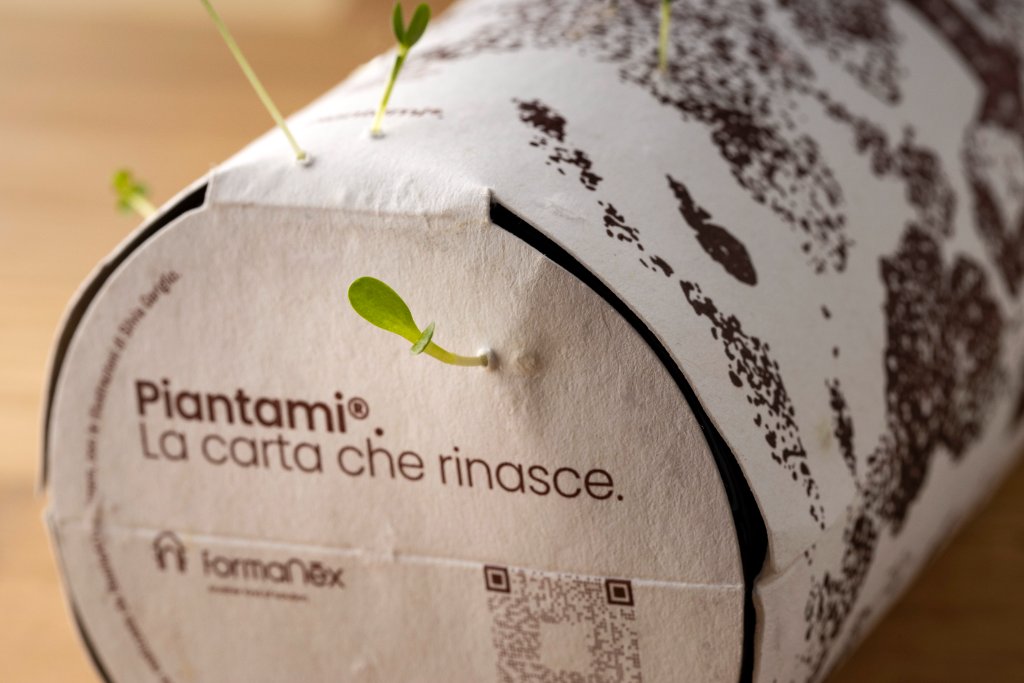




FormaNex papers are made from recycled cellulose fibres and seeds, both of biological origin. Live seeds are integrated into the material and remain viable.
The bio-based component comes from raw materials of biological origin: recycled cellulose fibres and seeds. The integrated live seeds add a biological function to the material: after use, the paper can be planted and the seeds can germinate and grow into new plants.
This is why we define FormaNex papers as bioactive. Their biological function does not concern interaction with the packaged product, but the material itself and what can happen after it has been used.
Available in sheets and reels, they are developed to be printed, converted and used in real packaging applications, from sampling through to industrial production.

FormaNex enables brands to differentiate themselves through a tangible function of the material: the packaging does not end with use, but can turn its end of life into a new brand experience.
Materials of biological origin, the use of recycled fibres, FSC® certification and documented testing allow sustainability managers and buyers to assess the material through tangible and verifiable characteristics, rather than generic environmental claims.
Grammages, formats, printing and converting processes are configured according to the project. Samples, mock-ups and machine trials allow the material to be assessed before production.
Sheets, reels and seven grammages make it possible to move from sampling to initial production runs and then to scheduled industrial volumes.
FormaNex bioactive papers have already been used in real premium packaging projects, making the material's bioactive function part of the experience, design and brand story.
MATER features a removable and plantable label made from Carta Piantami®, a bio-based and bioactive paper developed and manufactured by Made Consulting S.r.l. (FormaNex). The label is designed to be removed from the bottle without adhesives and planted after use.
Conceived by BasileADV and Vimem for Profilia S.p.A., MATER makes the label’s after-use experience an integral part of the product concept. The project received international recognition in packaging design, including the Pentawards 2026 Gold Award in category F.01 Sustainable Design – Beverages.

For Gin Mare, we supplied FormaNex bioactive papers for packaging developed around a project dedicated to protecting the sea.
After use, the plantable paper allows the brand story to continue through seed germination and the growth of new plants.
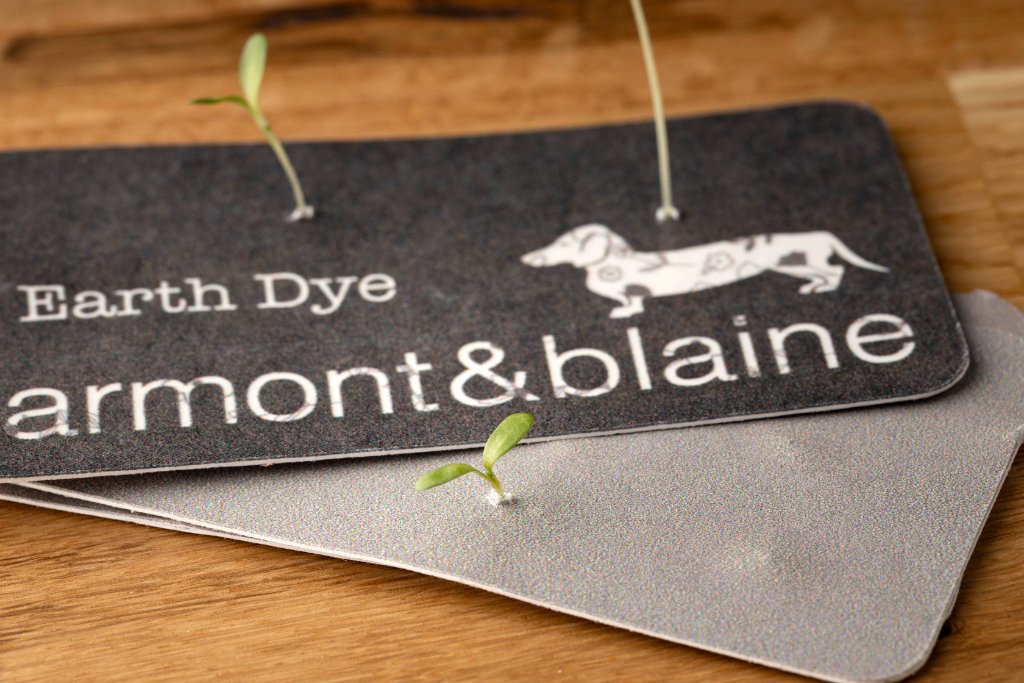
For Harmont & Blaine, we produced hangtags in FormaNex bioactive paper for products that were actually brought to market.
A real application demonstrating how the bioactive function can also be integrated into standard product communication and identification materials.
FormaNex bio-based and bioactive papers are supported by certifications, testing and technical documentation that help buyers, brands and production partners assess the material according to tangible and verifiable criteria.
All FormaNex bioactive papers are FSC® certified under licence code FSC® C200263.

The papers are suitable for contact with dry food under the conditions specified in the relevant documentation.

The recycled bioactive and plantable FormaNex papers that were tested complied with the limits set out in Italian Legislative Decree 152/2006.
Testing for introduction into soil applies exclusively to the FormaNex papers actually tested. The plantability of the complete packaging must also take into account inks, adhesives, foils, finishes and other added components.
FormaNex bio-based and bioactive papers make it possible to develop packaging and coordinated materials for beauty, wine & spirits, vaping, fashion and premium products, maintaining continuity between visual identity, packaging function and the experience after use.
For cosmetics, fragrances, wine & spirits, vaping and premium products. The different grammages make it possible to develop cartons and packaging in which tactile qualities, design and bioactive function become part of the product identity.

For wine, spirits, cosmetics and premium products. Labels, bottle collars and sleeves transform a surface normally used for information or decoration into an element that, after use, can be planted and generate new plants.
For fashion, cosmetics, fragrances and retail. An element normally intended for product identification and communication acquires a second function after use.

Shopping bags, leaflets, cards, inserts and information materials can be produced with FormaNex bioactive papers, creating a coordinated system around the same material and the same post-use experience.
Each application is assessed in relation to grammage, format, printing, converting, added components and expected quantities.
We assess application, objectives, volumes and production process to identify the material requirements.
We define grammage, colour, format, sheets or reels and seed type according to the packaging to be produced.
We provide samples for mock-ups, prototypes, printing and converting trials, involving your production partner when required.
Following validation, production can begin with an initial pilot run and subsequently move to scheduled production and industrial volumes.
Evaluate FormaNex papers with your current printer through samples, trials and an initial pilot run.
Configurations developed for industrial packaging applications, print trials and scheduled production.

70 × 100 cm sheets, available in seven grammages from 190 to 500 g/m².

1,000 mm wide reels with a 3” core, for scheduled production and converting processes.
| Category | Recycled bio-based and bioactive papers with integrated live seeds, developed for industrial and premium packaging applications. |
|---|---|
| Bio-based component | Recycled cellulose fibres and seeds, both of biological origin. |
| Bioactive function | Live seeds integrated into the paper structure, which remain viable within the material and can germinate after use. |
| Grammages | From 190 to 500 g/m², in 7 grammages. |
| Sheet format | 70 × 100 cm. |
| Reels | 1,000 mm width with 3” core. |
| Colours | Sabbia Bianca and Terra di Siena, with availability to be confirmed according to grammage. |
| Tested printing technologies | Offset, digital, industrial inkjet and flatbed UV. Compatibility is verified for each project. |
| Applications | Folding cartons, labels, bottle collars, sleeves, hangtags, shopping bags and coordinated materials. |
| Seeds | Selected mixes, including bee-friendly varieties. Dedicated configurations can be assessed for compatible quantities. |
| Packaging converting processes | Cutting, die-cutting, creasing, folding and adhesive application are feasible processes, to be configured according to grammage and project requirements. Request the technical sample book. |
| Seed integration | The seeds are integrated into the fibrous structure of the paper. This configuration helps keep them securely embedded during handling and processing. |
| Industrial validation | Before production, trials are recommended on the machine, tooling, inks, adhesives, speeds and planned processes. |
| Production capacity | At least 3,800 tonnes per year. |
| FSC® certification | All FormaNex papers are FSC® certified under licence code FSC® C200263. |
| Food contact | Suitable for contact with dry food according to the conditions specified in the applicable documentation. |
| Introduction into soil | The recycled bioactive and plantable FormaNex papers that were tested complied with the limits set out in Italian Legislative Decree 152/2006. |
Sabbia Bianca and Terra di Siena, with availability to be confirmed according to grammage.
Offset, digital, industrial inkjet and flatbed UV. Compatibility is verified for each project.
Selected mixes, including bee-friendly varieties. Dedicated configurations can be assessed for compatible quantities.
Final grammages, colours, seeds and technical characteristics are confirmed in the technical data sheet for the selected material.
Enter product type, grammage and quantity to obtain a comparative estimate useful during the preliminary concept, ecodesign and internal assessment stages.
The simulator uses the stated coefficients and sources to provide an initial overview of the impacts associated with the selected configuration. The results can support the brand's internal assessments and comparison between different configurations, without replacing an LCA of the finished packaging.
The calculation uses the entered data and the coefficients reported in the sources associated with the simulator. For each result, the unit of measurement, assumptions applied and references used are provided.
The overall assessment of the finished packaging must also take into account printing, adhesives, finishes, transport and post-use behaviour.
After use, FormaNex paper is not thrown away: it is prepared for planting. Just a few steps create the conditions that allow the live seeds contained in the material to germinate.
Tear the paper into small pieces and remove any non-plantable components.
Leave the pieces in water for approximately 20 hours.
Spread the pieces over moist soil without overlapping them. Gently press them onto the surface, without burying them or covering them with additional soil.
Mist regularly, avoiding waterlogging, and place the pot in a bright environment, ideally at around 25 °C.
The seeds contained in the paper can then germinate and grow into new plants. Timing and results vary depending on the seed variety, temperature, light, moisture and growing conditions.
Answers to the main questions from brands and packaging, innovation, sustainability and procurement managers.
FormaNex papers are bio-based because they are made with recycled cellulose fibres and seeds, both of biological origin.
They are bioactive because the integrated seeds remain alive and viable within the material and, after use, can germinate and grow into new plants.
The bioactive function does not concern interaction with the packaged product, but the material itself and what can happen after it has been used.
FormaNex papers are developed for industrial packaging applications, not only for small formats or craft production.
They are available in industrial 70 × 100 cm sheets and 1,000 mm wide reels, in different grammages, and are designed to be printed and converted using standard packaging processes.
They can be die-cut, creased and folded while retaining the structure required to produce the packaging. Configurations are also available for offset, digital, industrial inkjet and flatbed UV printing.
The live seeds are integrated into the fibrous structure of the paper and remain viable within the material, adding a biological function after use to the paper's conventional function.
Folding cartons, labels, sleeves, bottle collars, hangtags, shopping bags, inserts and coordinated materials. The configuration is defined according to the structure, printing, converting processes and required volumes.
Offset, digital, industrial inkjet and flatbed UV. Before production, we recommend a trial on the machine, inks and planned processes.
For compatible quantities and projects, dedicated seed varieties or mixes can be evaluated according to availability, geographical destination and production process.
Yes. All FormaNex papers are FSC® certified under licence code FSC® C200263.
They are suitable for contact with dry food, according to the conditions and intended uses specified in the relevant documentation.
No. Compliance with the environmental limits set out in Italian Legislative Decree 152/2006 applies exclusively to the FormaNex papers that have actually been tested.
FormaNex paper is designed to be planted. However, the plantability of the finished packaging must also take into account inks, adhesives, foils, finishes and other added components.
Yes. Cutting, die-cutting, creasing, folding and adhesive application are feasible processes. The configuration is defined according to grammage, project geometry, tooling and production parameters.
Sampling and technical trials allow the solution to be verified before production.
The seeds are integrated into the fibrous structure of the paper, rather than simply applied to the surface. This configuration helps keep them securely embedded during handling and processing.
Printing and converting parameters are nevertheless verified through the trials planned for the project.
Compatibility is verified according to the machine, grammage, format, speed and planned process.
For automated lines or continuous production, we recommend sampling, a machine trial and a pilot run.
Yes. You can evaluate FormaNex with your current printer or converter through samples, technical trials and an initial pilot run.
Material feeding, printing, drying, creasing, die-cutting, folding, gluing, finishing and line speed should be assessed.
The trials make it possible to define the most suitable configuration for the packaging and production process.
Yes. Samples are available for material assessments, mock-ups and print trials. Overall production capacity is at least 3,800 tonnes per year.
Tell us about the application, sector and indicative volumes. We will help you identify the most suitable paper, grammage, format and configuration and define the sampling and trial process before production.
Request information